澳洲树种: 1. Delonix regia is a species of flowering plant in the bean family Fabaceae, subfamily Caesalpinioideae. It is noted for its fern-like 蕨类 leaves and flamboyant display of flowers. In many tropical parts of the world it is grown as an ornamental tree and in English it is given the name royal poinciana (跑恩see安那) or flamboyant. It is also one of several trees known as "flame tree". In the USVI it is called Flamboyant, and if you have ever seen this tree in bloom you would know the reason right away. Many consider the Flamboyant among the most beautiful trees in the world. It requires a tropical or near-tropical climate and can tolerate drought and salty conditions. It is well established throughout the Caribbean where it is adored for its beauty. In Puerto Rico, for example, many paintings feature the Flamboyant. It is the national flower of St. Kitts and Nevis. It is on postage stamps from Dominica, Anguilla and Montserrat. Though strongly associated with the Caribbean this spectacular tree is native to Madagascar. While admired for its beauty home owners in the USVI do keep a watchful eye on where Flamboyant trees grow. The dense shade and root system prevent the growth of other species under it and its wide-spreading roots can be a threat to building foundations and sidewalks.


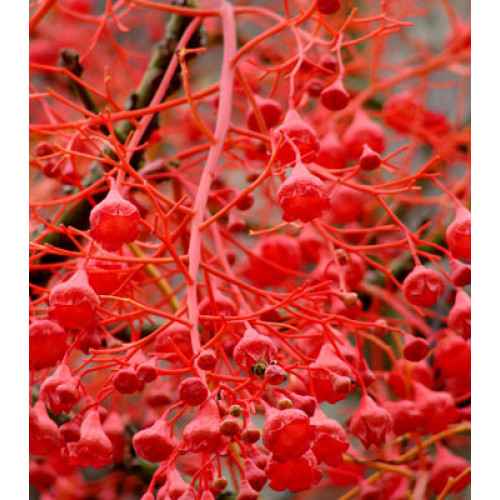
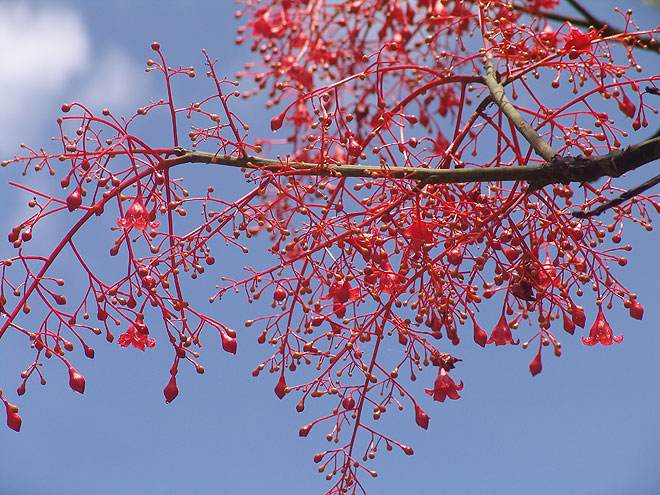
Brachychiton acerifolius, commonly known as the Illawarra flame tree, is a large tree of the family Malvaceae[a] native to subtropical regions on the east coast of Australia. It is famous for the bright red bell-shaped 铃型的花 flowers that often cover the whole tree when it is leafless. Along with other members of the genus Brachychiton, it is commonly referred to as a Kurrajong. Similarly to its kurrajong relatives the leaves are variable, with up to 7 deep lobes. It is deciduous - shedding its leaves after the dry season. The spectacular flowering occurs in late spring and new foliage is ready for the summer rains. In areas where the winter is not particularly dry, this natural rhythm may become somewhat erratic and the tree may flower only partially. Flowers are scarlet bells with 5 partially fused petals. The pod-like fruits (technically known as follicles) are dark brown, wide, boat-shaped and about 10 cm long. They contain masses of thin bristles that stick in the skin of humans, as well as yellow seeds. These are nutritious and are traditionally eaten by Aborigines after toasting.The splashes of colour and vitality of Far North Queensland are part of what makes it such a wonderful destination, especially considering it's such a serene and soothing place. And one live-in resident that adds to this chromatic frenzy, in such a graceful manner, is the Illawarra flame tree, scientifically named Brachychiton acerifolius. A small to medium sized tree which can fire up to 40 metres in height, the flame tree is Queensland’s biblical incarnation of the burning bush. This striking looking tree has bell-shaped, scarlet coloured flowers, which form in clusters at the end of its branches. At the ends of these flowers lie large leather pods which host corn-like seeds. These thin seeds contain a nutritious foodstuff within, which were eaten by Aborigines after toasting. The seeds can also be collected to propagate this wonderful specimen, although if choosing to do so, it's best to use gloves due to the irritant hairs they contain. When in bloom, Brachychiton acerifolius is arguably the most spectacular of Australia’s native trees. Typically deciduous year-round, it flowers in late spring, therefore anyone travelling in north-eastern Australia at present could see this tree in full-fire. Keep in mind this feat takes 5-8 years to perform from seedling, so it's a well-prepared show. Although entirely native to the tropical regions of Australia's east coast, the flame tree is now accustomed to temperate climates, as it’s cultivated the world over for its remarkable beauty. However, its full-growth potential is only reached in its original, warmer climate of north-eastern Australia, where you may be fortunate enough to encounter a fiery whopper. Besides international plant lovers, Brachychiton acerifolius attracts insects, birds, butterflies, and the many Australian's who flock in droves to gaze upon the fiery foliage of this unique and wonderful specimen. This tree is tolerant of temperate climates and is now cultivated world-over for its beauty. However, the maximum height of 40 metres (130 ft) is reached only in the original, warmer, habitat. It usually grows to be about 20 metres (66 ft). There is something amazing about experiencing seasonal change in the landscape. Living in Brisbane's subtropical climate limits the type of vegetation that can achieve that. But we do have the gorgeous BRACHYCHITON acerifolium, which is perfect for our region and provides seasonal colour. The Flame Tree is a fast-growing tree providing a rich display of florescent red flowers that cover the whole tree in Spring. It is deciduous 落叶木的, shedding its leaves after the dry season. The large glossy green leaves provide cooling shade while the interesting trunk can become a focal feature of its own. It's a great tree for native gardens and asian-influenced gardens. This tree is drought tolerant 耐干旱的, but can also handle humidity and extended periods of wet. As climate changes, Queensland property owners in particular need to select vegetation for the long-term that adapts to both dry hot conditions and humid subtropical conditions.


2. Jacaranda is a genus of 49 species of flowering plants in the family Bignoniaceae, native to tropical and subtropical regions of Mexico, Central America, South America, Cuba, Hispaniola, Jamaica, and the Bahamas. It has been planted widely in Asia especially in Nepal. Jacaranda mimosifolia is quite common in southern California, Florida, Argentina, South Africa, Zimbabwe, Australia, New Zealand, Spain and Zambia and has been introduced to most tropical and subtropical regions to the extent that it has entered the popular culture.


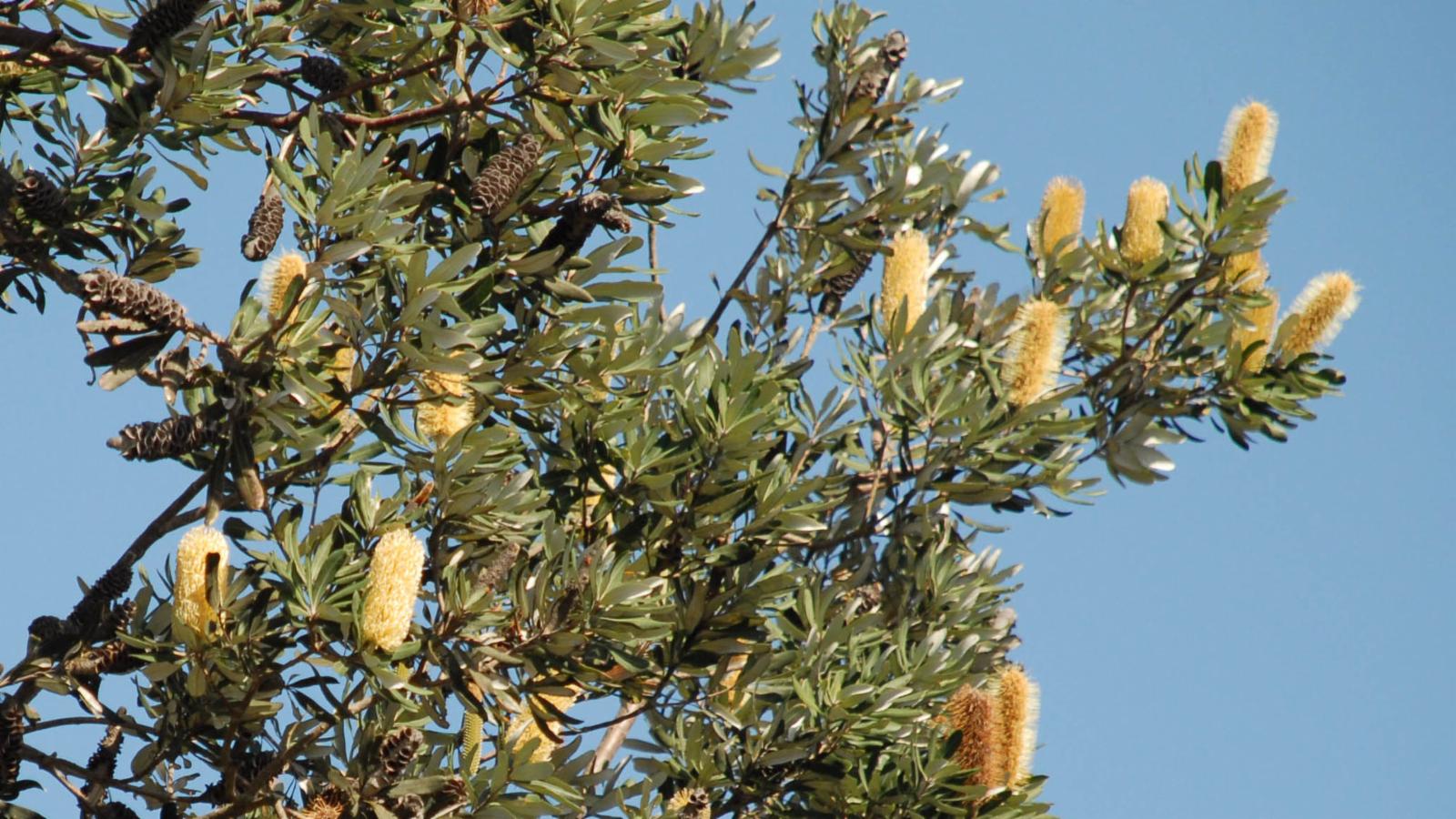


This one is a stunner. The Eucalyptus Summer Red boasts stunning red blossoms and the Summer Beauty shows off with its pink flowers. These natives are not cheap trees, but provide a spectactular show of blossoms and are a manageable dwarfed form, with around maximum 6m height. The foliage is more dense than a usual eucalypt and won't drop branches like its giant cousins. They will attract birds and provide a stunning talking point 话题 to your garden.


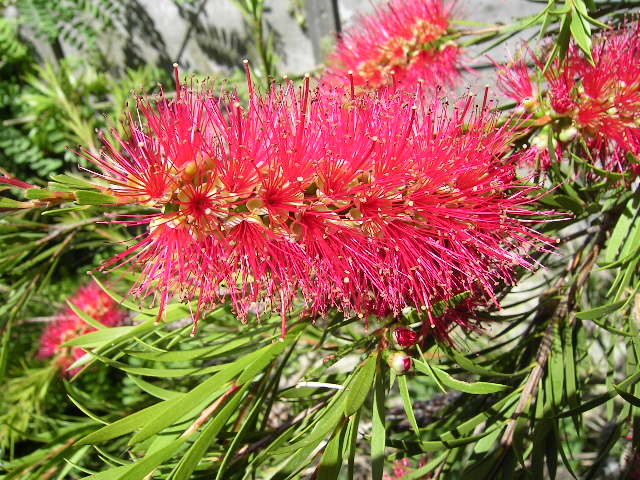
6. Callistemon /ˌkælɪˈstiːmən/ is a genus of shrubs in the family Myrtaceae, first described as a genus in 1814. The entire genus is endemic to Australia but widely cultivated in many other regions and naturalised in scattered locations. Their status as a separate taxon is in doubt, some authorities accepting that the difference between callistemons and melaleucas is not sufficient for them to be grouped in a separate genus. Callistemon species have commonly been referred to as bottlebrushes because of their cylindrical, brush like flowers resembling a traditional bottle brush. They are mostly found in the more temperate regions of Australia, especially along the east coast and typically favour moist conditions so when planted in gardens thrive on regular watering. However, two species are found in Tasmania and several others in the south-west of Western Australia. At least some species are drought-resistant and some are used in ornamental landscaping elsewhere in the world.

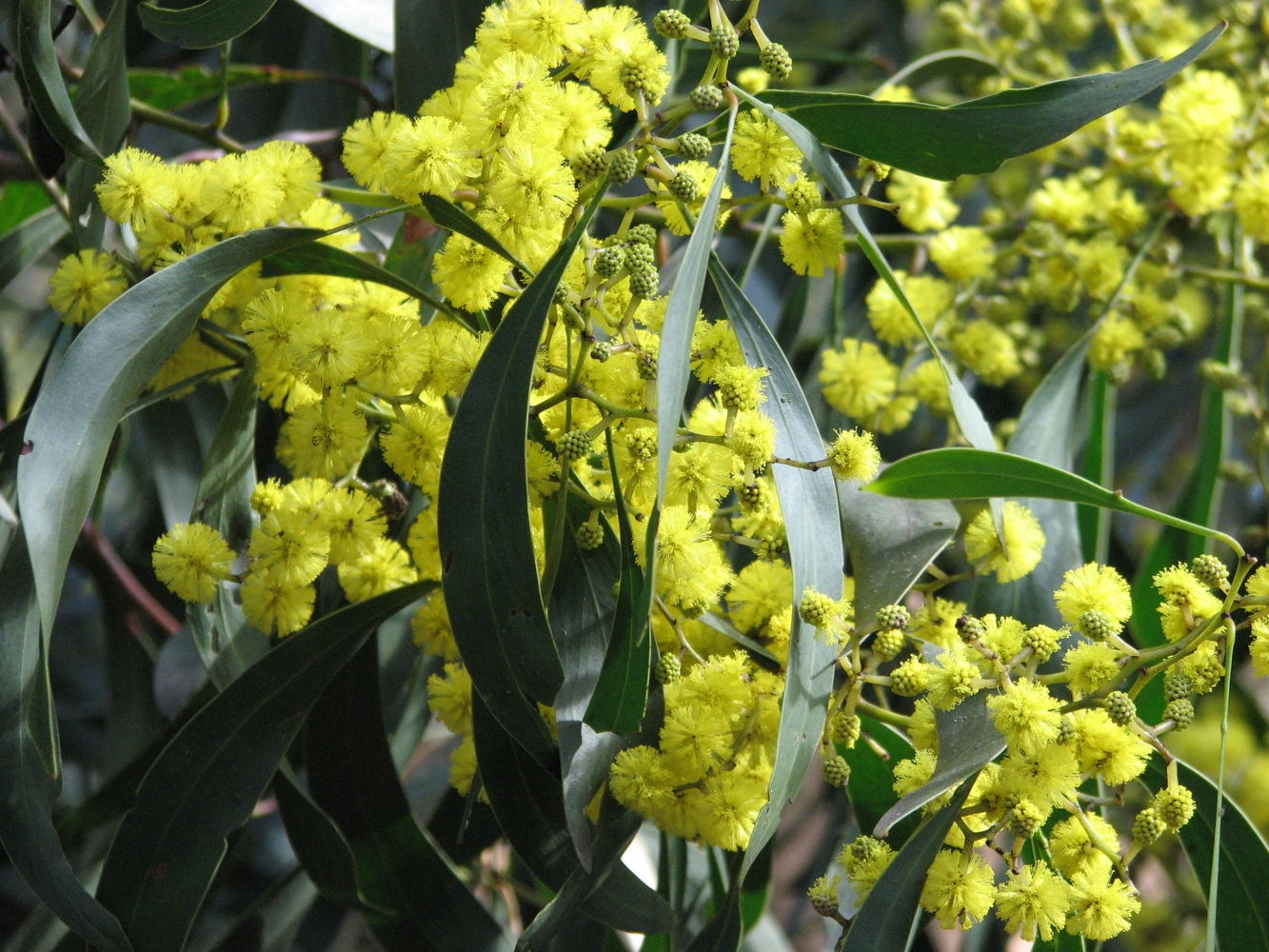

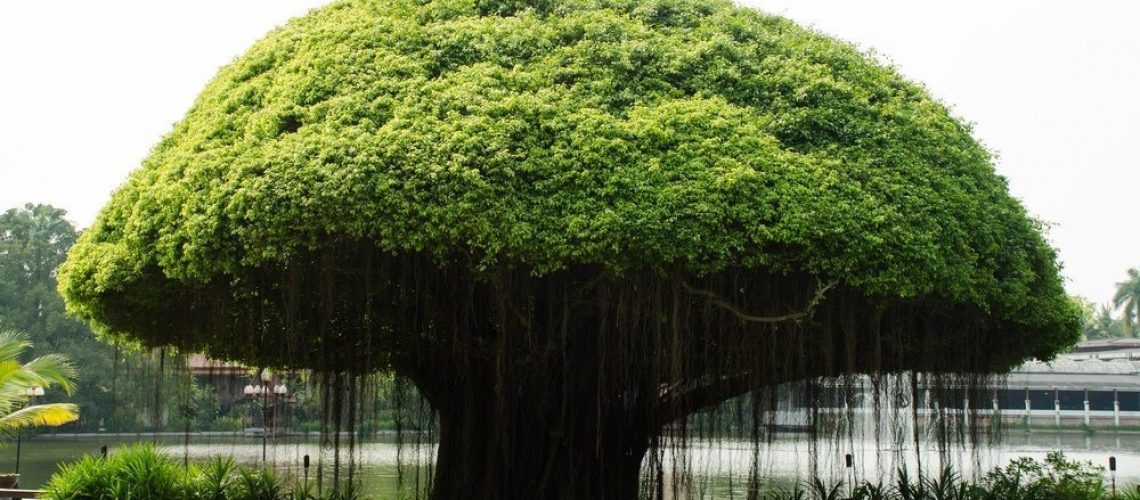

10. Melaleuca quinquenervia, commonly known as the broad-leaved paperbark, paper bark tea tree ( bark I. [uncountable] the hard substance that covers a tree. II. [countable] Sound effect the short loud sound that a dog makes. v. I. [intransitive] Sound effect to make the short loud sound that a dog makes. II. bark out [intransitive/transitive] to say or shout something in a loud angry voice. He started barking orders at me. someone's bark is worse than their bite 面恶心善 used for saying that someone is not as mean or rude as they seem to be when they talk to you), punk tree or niaouli, is a small- to medium-sized tree of the myrtle family, Myrtaceae. It grows as a spreading tree up to 20 m (70 ft) tall, with its trunk covered by a white, beige and grey thick papery bark. The grey-green leaves are egg-shaped, and cream or white bottlebrush-like flowers appear from late spring to autumn. It was first formally described in 1797 by the Spanish naturalist Antonio José Cavanilles. Melaleuca quinquenervia is native to New Caledonia, Papua New Guinea and coastal eastern Australia, from Botany Bay in New South Wales northwards into Queensland. It grows in swamps, on floodplains and near rivers and estuaries, often on silty soil. It has become naturalised in the Everglades in Florida, where it is considered a serious weed by the USDA. The common names broad-leaved paperbark, broad-leaved tea tree or simply paperbark or tea tree are used in Australia, and punk tree is used in the United States. Paperbark adds a delightful smoky flavour to fish, chicken and vegetables. The broad-leaved paperbark is a medium to tall tree. It has whitish papery bark, rather like many fine sheets of tissue paper stuck together, hence the common name. To use, wash and soak in water before adding your ingredients. You can then either tie with string or wrap the whole thing up in alfoil.


11. The CUPANIOPSIS anacardioides - also known as a Tuckeroo,
Carrotwood, Beach Tamarind and Green-leaved Tamarind - is a small
lollipop-shaped tree, again good for the side of houses as a
low-maintenance hedge. The Tuckeroo is also great alongside pathways as
the lower branches can be trimmed for passers-by. Local to the Brisbane
area, this native can produce berries which are bird-attracting and has
dark green glossy leaves which look great with any planting scheme. Your
gutters will be happy that the Tuckeroo doesn't drop much leaf litter,
and your pavers will be thrilled that it has a non-evasive root system.
This is quite possibly the perfect tree for Brisbane gardens. Cupaniopsis anacardioides, with common names tuckeroo, carrotwood, beach tamarind and green-leaved tamarind, is a species of flowering tree in the soapberry family, Sapindaceae, that is native to eastern and northern Australia. The usual habitat is littoral rainforest on sand or near estuaries. The range of natural distribution is from Seven Mile Beach, New South Wales (34.8° S) to Queensland, northern Australia and New Guinea.


12. The Weeping Lilly Pilly/Lilli Pilli (not an actual Lilly Pilly!) has a great lollipop shape and provides nice shade. This tree is slightly larger at around 8m height and 6m spread, so best placed further away from the building on your property. It's a bigger version of the Tuckeroo, above. An attractive evergreen tree with a dense canopy of weeping foliage which is ideal for clipping as a hedge, screening, as a feauture tree or a windbreak.


Syzygium smithii (common lilly pilly) (formerly Acmena smithii) is a summer-flowering, winter-fruiting evergreen tree, belonging to the myrtle family Myrtaceae. It shares the common name "lilly pilly" with several other plants. In New Zealand, it is commonly known as 'monkey apple'. It is planted as shrubs or hedgerows, and features: rough, woody bark; cream and green smooth, waxy leaves; flushes of pink new growth; and white to maroon edible berries. Unpruned, it will grow about 3–5 m (9.8–16.4 ft) tall in the garden. The trunk is sometimes buttressed. The bark is brown and scaled and flakes off easily. Its dark green shiny leaves are arranged oppositely on the stems, and are lanceolate or ovate and measure 2–10 by 1–3 cm (1–4 by 0.5–1 in). The cream-white flowers appear from October to March, occurring in panicles at the end of small branches. Berries follow on, appearing from May to August, and are oval or globular with a shallow depression at the top. They measure 0.8 to 2 cm in diameter, and range from white to maroon in colour.


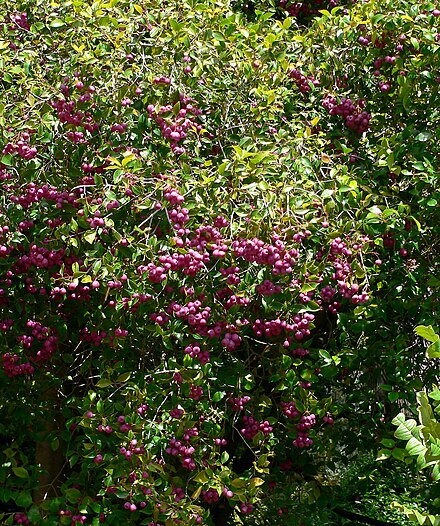
13. Koelreuteria paniculata 栾树 is a species of flowering plant in the family Sapindaceae, native to eastern Asia, in China and Korea. It was introduced in Europe 1747, and to America in 1763, and has become a popular landscape tree worldwide. Common names include goldenrain tree, pride of India, China tree, or varnish tree.

14. American sweetgum (liquid amber 琥珀) (Liquidambar styraciflua), also known as American storax, hazel pine, bilsted, redgum, satin-walnut, star-leaved gum, alligatorwood or simply sweetgum, is a deciduous tree in the genus Liquidambar native to warm temperate areas of eastern North America and tropical montane regions of Mexico and Central America. Sweet gum is one of the main valuable forest trees in the southeastern United States, and is a popular ornamental tree in temperate climates. It is recognizable by the combination of its five-pointed star-shaped leaves and its hard, spiked fruits. It is currently classified in the plant family Altingiaceae, but was formerly considered a member of the Hamamelidaceae. The earliest known published record of Liquidambar styraciflua is in a work by Spanish naturalist Francisco Hernández published posthumously in 1615, in which he describes the species as a large tree producing a fragrant gum resembling liquid amber, whence the genus name Liquidambar.


The worst trees to plant: 1. Eucalyptus tree (gum tree) Eucalyptus has many varying types, differing in height, shape, and colour, but they all have similar characteristics that make them unsuitable for planting near a home on your property: This species of tree can grow quite large, and both root system and canopy will pose possible issues. Eucalyptus trees' root systems can be quite aggressive and far-reaching, and it is common for retaining walls or building foundations to be disturbed by searching roots. Roots can travel dozens metres, and further than their dripline. Branches are likely to die off but not fall straight away. This leaves dangerous objects that may damage a person or property during storms or times of strong wind. Often eucalyptus branches can just become weak and fall to the ground without any external help. Often, single large gum tree specimens are lone survivors of development. Where once they were a part of a larger stand of trees, naturally designed to withstand strong wind and storms, now alone and possibly structurally weak. It is vital to have a qualified arborist to maintain your tree at least every two years to remove dead branches and check the structural integrity of the tree for safety. 2. Ficus species (fig tree) Ficus plants are common as house ornament specimens in pots, and as neat topiary 'lollipop' shapes by the front door. They have lush green leaves and straight white trunks - they really are a beautiful plant. But as most potted plants go, once neglected they are thrown out to the yard where the roots break through the pot to the ground. Sometimes they are planted neatly in the ground, and maintained as a topiary. These are rainforest giants that will grow 20-30 metres tall and wide. It is not a tree for a suburban yard. The root system is very aggressive and strong and will easily knock down a masonry retaining wall. Even root barriers will struggle with this species. 3. Palms: Palms are beautiful plants in a domestic situation while young. The fronds ( a large long leaf divided into many narrow sections. fern/palm fronds. a long narrow piece of seaweed. ) are visible and can create a tropical oasis feeling in the yard or next to the pool. As they get older however, the problems begin: Palm canopies grow higher and higher, until all you can see is a 'telephone pole' in the garden. Palm fronds can be large, and falling down on windy days are disturbing and messy. Some species of plam tree produce dates or fruit, that either attract annoying wildlife (screeching bats) or create a mess around the pool or in the pool (clogging filter systems). If planted too close, the expanding trunk and roots of a palm tree will lift pavers and have been known to damage retaining walls. 4. Deciduous trees: Frangipani trees, Pink Trumpet trees, Golden Rain trees, Flame trees, Liquid Amber trees and other deciduous trees are wonderful features in the garden and can provide a spectacle in the turning of the seasons. Be careful of where these are planted though: Dropping leaves can clog gutters and cause continuing damage if not cleaned out regularly. Leaves on shady, wet paths can also cause injury to pedestrians if not frequently removed.
